

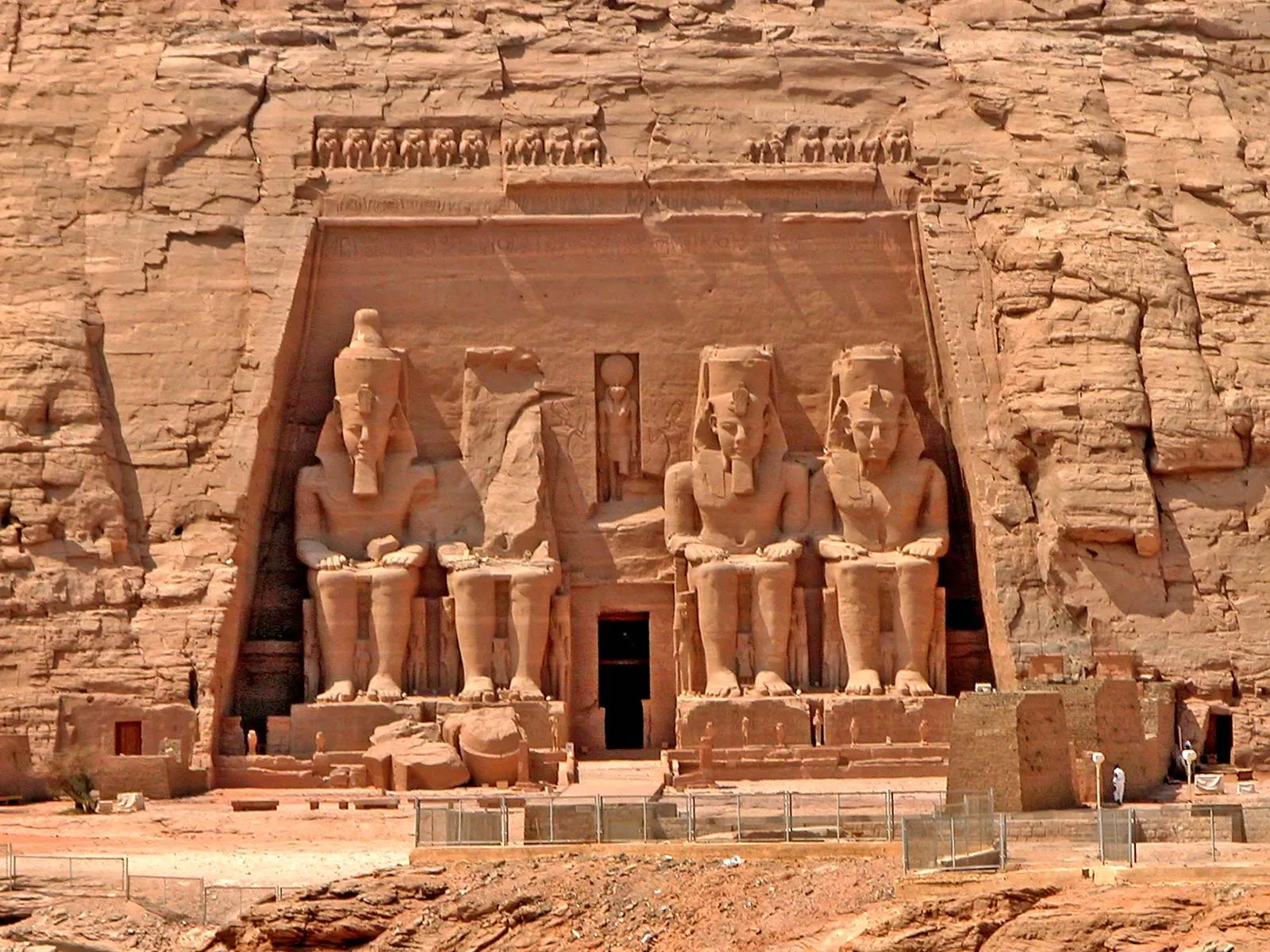

Introduction to Abu Simbel Temple
The Abu Simbel Temple stands as a remarkable testament to ancient Egyptian civilization, situated near the banks of the majestic Nile River. Constructed during the reign of Pharaoh Ramses II in the 13th century BCE, this monumental achievement is an architectural marvel that continues to capture the imagination of historians and tourists alike. The temple complex is comprised of two distinct structures, primarily dedicated to the deities Amun, Ra-Horakhty, and Ptah, as well as the illustrious Pharaoh Ramses II himself.
Ramses II, often considered one of Egypt’s most powerful pharaohs, commissioned the temples of Abu Simbel to commemorate his victory at the Battle of Kadesh and to solidify his legacy. The grandeur of the structures is unmistakable; each of the four colossal statues that flank the entrance stands around 20 meters tall, symbolizing both the pharaoh’s divine rule and his connection to the gods. The intricate carvings and hieroglyphs adorning the temple walls illustrate key events from Ramses II’s reign, providing insight into the social and political landscape of the time.
The construction of Abu Simbel was not merely an act of artistic expression but also served a significant political purpose. By positioning the temples on the border with Nubia, Ramses II aimed to showcase his power and to instill fear in his adversaries. Furthermore, the alignment of the temple allows sunlight to illuminate the inner sanctum during specific times of the year, reflecting the sophistication of ancient Egyptian engineering and artistry. This connection between divine order and architectural innovation exemplifies why Abu Simbel is regarded as a jewel of Egypt’s archaeological heritage.
The Historical Significance of Abu Simbel Temple
The Abu Simbel Temple, built during the reign of Pharaoh Ramses II, stands as a monumental representation of his power and authority, echoing the grandeur of ancient Egyptian civilization. Constructed in the 13th century BCE, this architectural marvel is not only a testament to the engineering capabilities of its time but also an embodiment of the deep-rooted religious beliefs and artistic expressions prevalent in ancient Egypt.
Ramses II commissioned the temple to immortalize his achievements and establish a legacy that would endure through the ages. Each of the temple’s four colossal statues depicts Ramses himself, emphasizing his divine kingship and his identification with the gods. Furthermore, the intricate hieroglyphics adorning the walls narrate tales of his military victories and highlight the pharaoh’s role as a protector of the people, reinforcing his position as a god-like ruler.
Beyond its representation of power, Abu Simbel serves as a critical artifact of ancient Egyptian religion and culture. The temple is dedicated to various deities, including Ra-Horakhty, Amun, and Ptah, showcasing the polytheistic beliefs of the time. The interior sanctum, featuring intricate carvings and inscriptions, reveals the spiritual practices and rituals that were central to the lives of the ancient Egyptians. These symbols and artistic depictions offer invaluable insights into their worldview and societal structure, reflecting a civilization deeply entwined with mythology and spirituality.
Throughout history, the temple has continued to evoke fascination and reverence. Its relocation in the 1960s to save it from rising waters due to the construction of the Aswan High Dam exemplifies its significance, ultimately earning it recognition as a UNESCO World Heritage site. This designation highlights not only the architectural brilliance of Abu Simbel but also its enduring importance as a cultural treasure that connects the past with the present.
The Modern Preservation Efforts
The Abu Simbel Temple, one of the most significant monuments of ancient Egypt, faced an imminent threat in the 1960s due to the construction of the Aswan High Dam. This large-scale hydroelectric project resulted in rising water levels that endangered the temple’s integrity, leading to an international outcry for its preservation. At the forefront of this noble initiative was UNESCO, which spearheaded a campaign to save the temple from the devastating effects of flooding.
In 1964, a groundbreaking relocation project commenced, aiming to move the temple to a higher location to avoid the encroaching waters of Lake Nasser. This monumental task involved an ingenious engineering solution: cutting the temple into numerous large blocks. The technical challenges presented by this operation were immense, requiring not only precision but also innovative techniques to ensure the structural integrity of the temple throughout the process. Engineers and archaeologists meticulously documented each block’s position to ensure accurate reassembly at the new site.
This collaborative effort was a true international endeavor, bringing together experts and funding from various nations and organizations dedicated to preserving cultural heritage. The relocation was a remarkable success, showcasing human ingenuity and determination in the face of natural threats. Following the completion of the project in 1968, the temple was successfully reassembled, and it now stands as a testament to both ancient artistry and modern engineering.
Today, Abu Simbel Temple remains a symbol of heritage preservation, illustrating the importance of global collaboration in safeguarding cultural landmarks for future generations. The modern preservation efforts not only saved this historical masterpiece but also raised awareness about the value of preserving world heritage sites amidst contemporary challenges.
Cultural Impact and Legacy of Abu Simbel
The Abu Simbel Temple, an impressive remnant of ancient Egyptian architecture, has significantly influenced contemporary society in various aspects. Its construction during the reign of Pharaoh Ramesses II not only showcased the artistic brilliance of the time but also established a cultural icon that continues to resonate today. As a UNESCO World Heritage site, Abu Simbel attracts millions of tourists annually, reinforcing its status as a key player in Egypt’s booming tourism industry. Travelers from around the globe flock to marvel at the temple’s colossal statues and intricate carvings, which depict historical narratives and religious significance, enriching their understanding of ancient Egyptian culture.
Beyond tourism, Abu Simbel has had a profound impact on art and literature. Numerous artists and writers have drawn inspiration from the temple’s grandeur, incorporating its themes and motifs into their works. The temple’s striking visual representation of power and divinity allows it to serve as a metaphorical canvas for exploring human experience, inspiring creatives to utilize its imagery and stories in diverse forms. Additionally, its spectacular relocation in the 1960s to save it from rising waters has ignited discussions in artistic circles about preservation and the ethical responsibilities of modern societies towards their historical sites.
The legacy of Abu Simbel is not solely confined to art and tourism; it has also played a crucial role in driving archeological research. Scholars are compelled to examine the broader implications of Egyptian heritage, rooting their studies in the findings from Abu Simbel. The temple continues to be a point of reference in discussions about Egyptology, emphasizing the importance of cultural preservation in our rapidly changing world. Ultimately, Abu Simbel stands as a testament to resilience, safeguarding its place in history, while fostering a deeper connection between the past and present.
Discover the Story Behind Abu Simbel Temple Uncover the Secrets of Abu Simbel
0 Comment