

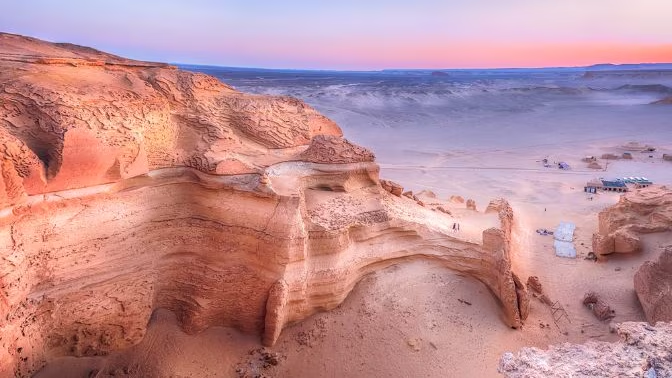

Introduction to Wadi El Hitan
Wadi El Hitan, commonly referred to as the Valley of the Whales, is a remarkable geological and paleontological site located in the western desert of Egypt, about 150 kilometers southwest of Cairo. This unique valley is recognized not only for its breathtaking landscape, characterized by stunning rock formations and vast expanses of desert, but also for its profound scientific significance as a UNESCO World Heritage site.
The site earned its UNESCO designation primarily due to its rich fossil records, which provide invaluable insights into the evolutionary history of whales and their terrestrial ancestors. Fossils found in Wadi El Hitan date back to the Eocene epoch, approximately 40 to 50 million years ago, offering a crucial window into the developmental stages of marine mammals. These discoveries have made Wadi El Hitan a vital area for paleontologists and researchers studying the evolution of life on Earth.
The discovery of the valley can be traced back to the late 19th century, although significant archaeological work began in the 1970s. Since then, the site has garnered international attention, not only for its rich paleontological finds but also for its majestic scenery, which attracts both tourists and scientists alike. Visitors to the valley can experience the beauty of its natural environment while learning about the historical significance of the fossils that lie beneath the surface.
Wadi El Hitan stands as a testament to the history of our planet, serving as a reminder of the ancient ecosystems that existed millions of years ago. The continued study of Wadi El Hitan not only enriches our understanding of whale evolution but also enhances our appreciation for the extraordinary diversity of life that has thrived on Earth throughout its history.
The Significance of Whale Fossils
The Wadi El Hitan, renowned as the Valley of the Whales, harbors an extraordinary collection of whale fossils that are vital for understanding the evolutionary history of these magnificent marine mammals. These fossils, dating back approximately 40 to 50 million years, provide critical insights into the transition of whales from terrestrial to aquatic environments. The evolutionary journey of whales exemplifies one of the most remarkable adaptations known in the animal kingdom.
Among the prominent fossils discovered in Wadi El Hitan are remarkably preserved skeletons of early cetaceans. Species such as Basilosaurus and Dorudon are pivotal in reconstructing the ecological and biological frameworks of prehistoric oceans. These fossils not only showcase the anatomical features of early whales—like elongated body shapes and reduced hind limbs—but also illustrate their adaptation to life in water, highlighting changes in their skulls, ear structures, and limbs over time.
The nearly complete whale skeletons found in this region serve as more than mere remnants of the past. They are instrumental in deciphering the evolutionary relationships between various marine species, demonstrating the gradual adaptations that have occurred throughout millions of years. Moreover, these findings support theories of evolution, reflecting how environmental pressures influenced the survival and diversification of species.
Additionally, the information gleaned from these fossils extends beyond paleontology; it enhances our grasp of marine biology by providing a historical context for contemporary whales and their ecological roles. The fossil record within Wadi El Hitan serves as a critical reminder of the complex interplay between species and their environments, embodying a significant chapter in the story of life on Earth.
Conservation Efforts and Challenges
Wadi El Hitan, recognized as a UNESCO World Heritage site, faces a dual challenge when it comes to conservation: preserving its unique paleontological treasures while mitigating the impacts of human activities and environmental factors. The site, renowned for its extensive fossil deposits of ancient whales and their evolutionary significance, necessitates ongoing conservation efforts aimed at ensuring its integrity for future generations.
Several conservation initiatives have been implemented, primarily led by local organizations in collaboration with international bodies. The Egyptian government, alongside various NGOs, has developed strategies to monitor and protect the site’s fossil beds. These efforts include regular patrols to deter illegal excavations and measures to control tourism. UNESCO plays a crucial role by providing support and resources, facilitating international cooperation that enhances conservation efforts within Wadi El Hitan and raises awareness about its ecological and historical importance.
Despite these dedicated efforts, numerous challenges persist. Increasing tourism, while essential for local economies, poses a threat to the fragile ecosystem. Unregulated visitor access can lead to littering, damage to fossils, and habitat degradation. Additionally, climate change presents another layer of complexity, as fluctuations in weather patterns may affect the geological stability and overall health of the region’s environment.
This necessitates a comprehensive approach that balances the need for public access to Wadi El Hitan with the requirement to protect its unique resources. Education initiatives targeting both tourists and the local community are vital to fostering a culture of stewardship for this invaluable site. The long-term preservation of Wadi El Hitan hinges on the collaborative efforts of various stakeholders, committed to safeguarding its unparalleled fossil record and the ecological landscape for decades to come.
Visiting Wadi El Hitan: What to Expect
Wadi El Hitan, also known as the Valley of the Whales, is a UNESCO World Heritage site that offers an extraordinary glimpse into the prehistoric past. To effectively explore this natural wonder, it is essential to know how to get there, the best times to visit, the range of activities available, and how to engage with this delicate ecosystem responsibly.
Located approximately 150 kilometers southwest of Cairo, getting to Wadi El Hitan is relatively straightforward. The most common method is via private car or organized tour, which allows travelers flexibility in their schedule. Public transport options are limited; therefore, planning ahead is crucial. The journey takes visitors through the scenic landscapes of the Western Desert, enhancing the overall experience.
The ideal time to visit Wadi El Hitan is between October and April, when temperatures are more moderate. During these months, visitors can comfortably explore the area without the intense heat that characterizes the summer months. Early mornings or late afternoons also provide a more pleasant atmosphere while allowing for stunning photographic opportunities amidst the striking rock formations and marine fossils.
Once there, tourists can enjoy various activities such as guided tours, hiking, and fossil spotting. It is advisable to join a guided tour to gain deeper insights into the historical significance and fossil discoveries that have been made in the area. For those more adventurous, hiking through the rugged terrain provides a unique way to experience the stunning geology and paleontological history of Wadi El Hitan.
However, responsible exploration is essential to protect this unique ecosystem. Visitors should adhere to designated paths, refrain from touching or removing fossils, and be mindful of littering. Respecting the delicate ecological balance ensures that Wadi El Hitan remains a cherished destination for future generations.
Plan your visit to Wadi El Hitan today and explore one of Egypt’s most extraordinary natural wonders firsthand! Start your journey to Wadi El Hitan and witness millions of years of history carved into the desert.
0 Comment