

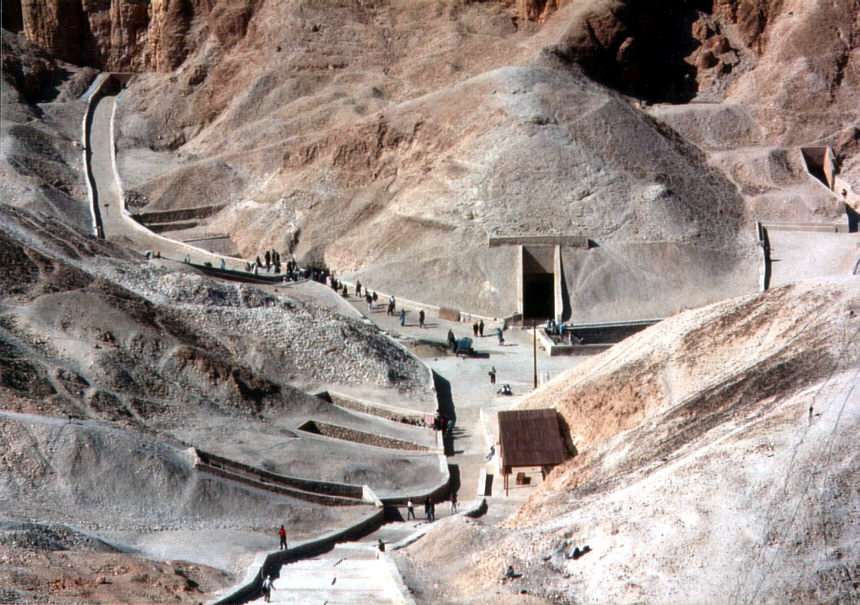

Introduction to the Valley of the Kings
The Valley of the Kings, nestled in the arid landscape of Egypt’s western desert near Luxor, is a key archaeological site that served as a burial ground for many of the most powerful pharaohs of Ancient Egypt. This secluded valley, known in ancient times as the “Place of Truth,” features a series of intricately designed tombs, showcasing the profound cultural significance and elaborate funerary practices that characterized ancient Egyptian society. The importance of this site is underscored by its role during a period where the foundation of Egyptian civilization was solidified, particularly during the New Kingdom era, approximately from the 16th to the 11th centuries BCE.
The Valley of the Kings is home to some of the most magnificent tombs ever discovered, including that of Tutankhamun—a name synonymous with ancient wealth and mystery. This valley was specifically chosen for its remote location, thought to protect the resting places of these rulers from grave robbers and natural elements. Over the centuries, it became a place of immense significance, housing over sixty tombs, varying in size and complexity, each reflecting the artistic and architectural advancements of the era.
What fascinates historians and archaeologists alike is not merely the grandeur of these tombs, but the insight they provide into the beliefs, rituals, and daily life of ancient Egyptians. The murals and inscriptions found within these tombs depict scenes of the pharaohs’ journeys to the afterlife, affirming their divine status and the importance of the afterlife in their culture. Even today, the Valley of the Kings continues to be the focus of extensive research and exploration, revealing new secrets and enhancing our understanding of this remarkable civilization.
Valley of the Kings Architecture and Design of the Royal Tombs
The tombs located in the Valley of the Kings exemplify the remarkable architectural achievements and artistic expressions of ancient Egyptian civilization. Built primarily during the New Kingdom period, these structures are not only monumental in scale but also rich in symbolic meaning. Each tomb’s design adheres to a distinct set of architectural styles, reflecting the evolving funerary practices and religious beliefs of the time.
A typical tomb structure consists of a series of corridors and rooms, with the burial chamber often situated at the most inaccessible part of the tomb to deter grave robbers. The walls of these chambers frequently showcase intricate hieroglyphics and elaborate paintings, depicting scenes from the Book of the Dead and other religious texts. The symbolism represented in these artworks served to guide the deceased through the afterlife, illustrating the importance of the afterlife in ancient Egyptian culture.
The materials employed in constructing these tombs, primarily limestone and sandstone, were carefully chosen for their availability and durability. The skilled artisans utilized advanced techniques to carve and decorate the tombs, ensuring that the designs encapsulated the cosmic order, known as Ma’at. Additionally, the deliberate orientation of the tombs towards key astronomical phenomena, such as the rising sun, highlights the ancient Egyptians’ profound understanding of the cosmos and its relationship to their spiritual beliefs.
Moreover, the architectural design of the tombs often reflected the status and power of the pharaohs or nobles buried within. For instance, larger and more elaborately decorated tombs were typically reserved for those of higher social standing, while simpler designs were used for lower-ranking individuals. This differentiation in tomb architecture served not only as a display of wealth but also as a means to ensure a successful transition to the afterlife based on their earthly status.
Notable Discoveries and Pharaohs’ Tombs
The Valley of the Kings, a burial ground for numerous pharaohs of ancient Egypt, has revealed some of the most remarkable discoveries in archaeology. Among the tombs unearthed, the tomb of Tutankhamun stands out not only for its treasures but also for the insights it provides into the life and death of a young pharaoh. Discovered by Howard Carter in 1922, it contained an array of artifacts, from golden masks to intricate jewelry, showcasing the craftsmanship and artistry of the time. The discovery of Tutankhamun’s tomb significantly altered perceptions of ancient Egyptian burial practices and the importance of funerary goods, as it was found remarkably intact compared to many other royal tombs.
Another notable tomb is that of Ramses II, also known as Ramses the Great, who ruled during the Nineteenth Dynasty. His tomb, known as KV7, displayed advanced architectural design, with elaborate wall paintings that depicted his victories, thereby emphasizing his status as a powerful leader. The findings from Ramses II’s tomb highlight the cultural and religious beliefs prevalent during his reign, illustrating how pharaohs were often deified and revered even after death.
The tomb of Seti I, father of Ramses II, is similarly significant, showcasing one of the most beautifully decorated burial chambers ever discovered in the Valley of the Kings. The quality of the artwork found within Seti I’s tomb is indicative of the high artistic standards of the time. Interestingly, the well-preserved mummy of Seti I further enhances our understanding of the mummification process and its importance in ensuring a pharaoh’s safe passage to the afterlife. The discoveries made in these tombs have had a profound impact on modern interpretations of ancient Egyptian society and culture, highlighting the interplay between the spiritual and material worlds in the lives of pharaohs.
Secrets and Mysteries Yet to be Uncovered
The Valley of the Kings has long been regarded as a treasure trove of ancient Egyptian history, but despite extensive exploration, many secrets remain buried beneath its arid landscape. Ongoing research and the employment of advanced technologies continue to unveil new insights. Recently, archaeologists have started utilizing ground-penetrating radar (GPR) and thermography to detect hidden chambers beneath the surface. These non-invasive methods allow researchers to explore areas without disturbing the fragile environment and the delicate remains within.
Moreover, the advent of 3D scanning technology enables the detailed mapping of existing tombs, providing insights into their construction and the potential existence of undiscovered burial sites. Speculation abounds regarding the possibility of hidden royal tombs waiting to be unveiled, particularly in relation to prominent figures in ancient Egyptian history. For instance, discussions around the potential location of a tomb belonging to Queen Nefertiti have gained traction, heightening interest in further investigations.
The importance of these ongoing explorations extends beyond mere curiosity. Preserving the Valley of the Kings is crucial not just for historical accuracy but also for cultural heritage. These sites serve as a link to our collective past and are invaluable for educating future generations. Scholars and preservationists emphasize the need for collaborative international efforts to ensure that these national treasures endure. As our methods of discovery evolve, and our understanding of ancient Egypt deepens, it is certain that many more secrets will eventually come to light, enriching our appreciation of a civilization that has shaped history in profound ways.
Visit the Legendary Valley of the Kings Plan Your Journey to the Valley of the Kings
0 Comment