

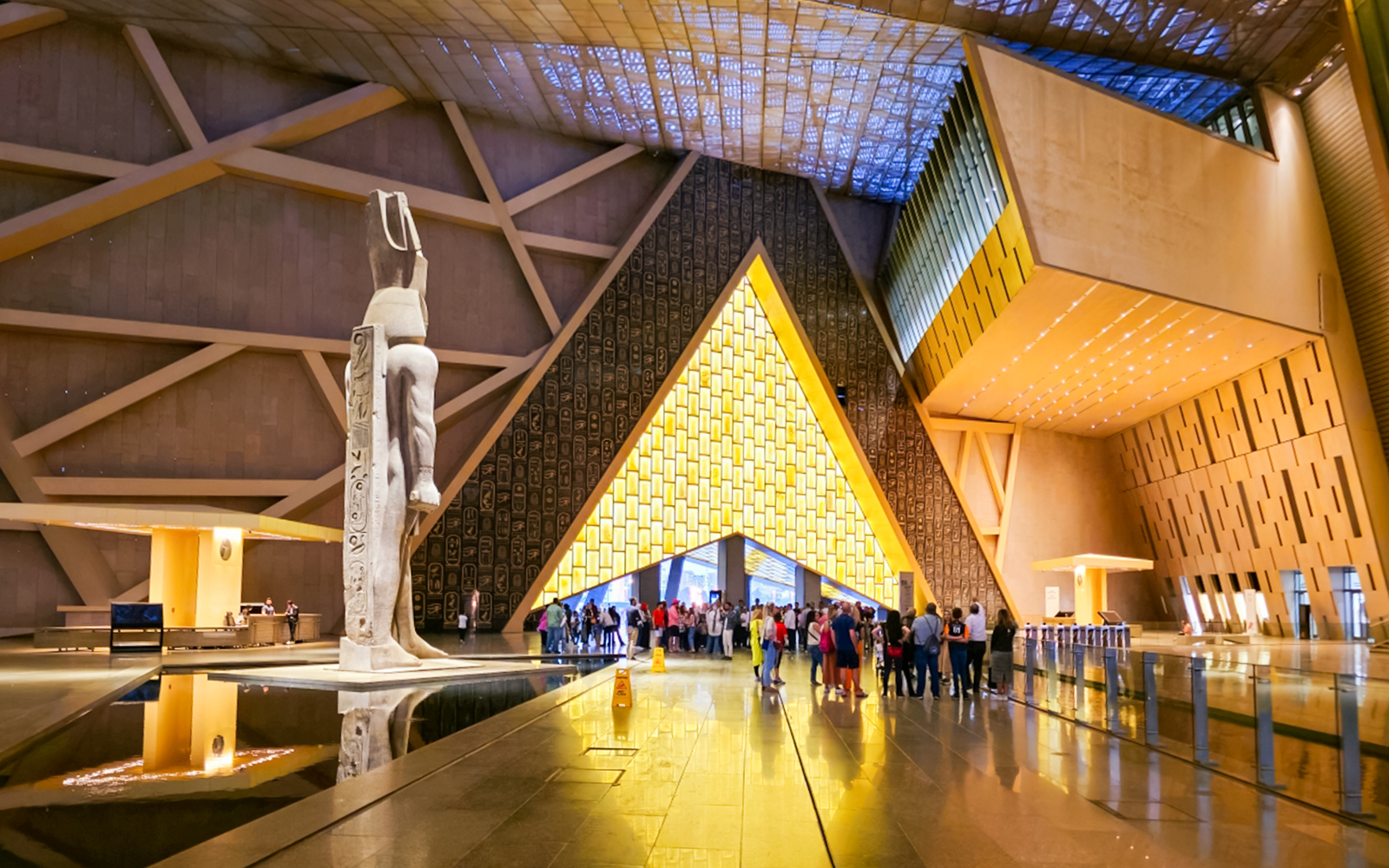

Introduction to the Grand Egyptian Museum
The Grand Egyptian Museum (GEM), a monumental cultural heritage site, is located on the Giza Plateau, near the iconic pyramids. This modern architectural masterpiece is set to become the world’s largest archaeological museum, dedicated to preserving and exhibiting the remarkable history of ancient Egypt. With its remarkable design by the architectural firm Heneghan Peng, the museum integrates cutting-edge technology with a respectful homage to traditional Egyptian elements, creating a unique and immersive environment for visitors.
The significance of the Grand Egyptian Museum extends beyond its impressive size and cutting-edge facilities. The museum aims to showcase over 100,000 artifacts, many of which have never been on public display, providing a comprehensive insight into the rich legacy of pharaonic civilization. Among these treasures, the museum will house the complete Tutankhamun collection, an extensive array of items unearthed from the tomb of the young pharaoh, further solidifying the GEM’s central role in preserving ancient Egyptian history.
The construction of the Grand Egyptian Museum began in 2002, with considerable investment aimed at modernizing Egypt’s cultural institutions while promoting tourism and education. Despite various challenges throughout its development, the museum’s anticipated opening is now set for 2023, with various exhibits and facilities designed to enhance the visitor experience. The museum not only seeks to educate the public on Egypt’s rich cultural heritage but also aspires to inspire a profound appreciation for the historical narratives encapsulated within these ancient treasures.
Grand Egyptian Museum Highlights: Ancient Treasures and Artifacts
The Grand Egyptian Museum boasts an extensive and unparalleled collection of ancient treasures and artifacts that provide insights into the splendor of ancient Egypt. Among the most iconic highlights are the treasures of Tutankhamun, which include ornate jewelry, ceremonial objects, and the famous golden mask. This collection not only reflects the artistry of ancient craftsmen but also offers a glimpse into the burial practices and beliefs surrounding the young pharaoh.
Another extraordinary facet of the museum’s collection is the exhibition of ancient mummies. These well-preserved remains shed light on the elaborate practices surrounding death and the afterlife in Egyptian civilization. Each mummy tells a unique story, revealing information about the individual’s status, health, and the intricate rituals that accompanied their burial. The museum’s commitment to education through these artifacts enables visitors to appreciate the cultural significance of mummification in ancient Egypt.
Additionally, the collection includes a plethora of monumental items such as statues, sphinxes, and wall reliefs that exemplify the artistry and engineering prowess of the time. These artifacts are not mere objects; they are key pieces of history that help contextualize the societal structure, religious practices, and daily life in ancient Egypt. By analyzing these artifacts, scholars aim to reconstruct a more comprehensive narrative of this fascinating civilization, ultimately showcasing the grandeur of its royal lineage.
Overall, the range of artifacts housed within the Grand Egyptian Museum represents a vital resource for historians and archaeology enthusiasts alike. The treasures and monumental items illustrate not only the aesthetic achievements of ancient Egyptian culture but also their enduring legacy that continues to captivate generations.
Insights into Pharaohs’ Legacy
The legacy of the pharaohs is a pivotal aspect of ancient Egyptian history, encapsulating a complex societal structure and rich cultural traditions. Pharaohs were not merely rulers; they served as divine intermediaries between the gods and the people, playing a crucial role in the governance and spiritual life of ancient Egypt. This duality of power and spirituality is profoundly reflected in the myriad artifacts and art pieces displayed at the Grand Egyptian Museum.
The historical context surrounding the pharaohs reveals their immense influence on the development of ancient Egyptian civilization. Each ruler contributed uniquely to the political landscape, religious practices, and cultural advancements, leaving behind monuments that stand testament to their reigns. The museum houses several artifacts that document not only their achievements but also the intricacies of their daily lives, dariadic rites, and challenges they faced, thus painting a holistic picture of pharaonic authority.
Moreover, the preservation of pharaonic legacies—through mummification, intricate tomb constructions, and monumental architecture—offers invaluable insights into ancient beliefs regarding the afterlife. Artworks, including statues and wall reliefs, symbolize not just the grandeur of the pharaohs’ reigns, but also their profound connection to the divine. These artifacts serve as educational tools, illustrating how the pharaohs’ ideologies continue to shape Egyptian identity today.
Studying pharaonic history allows contemporary scholars and enthusiasts to appreciate the continuity and transformation of cultural practices in modern Egypt. The legacy of the pharaohs influences not only historical understanding but also informs the religious and cultural milieu that defines present-day Egypt. The Grand Egyptian Museum stands as a beacon of this rich history, inviting visitors to delve deeper into the cultural heritage that emerged from the reign of the pharaohs and its lasting impact on Egyptian society.
Visitor Experience: Exploring the Museum
The Grand Egyptian Museum, also known as GEM, is a remarkable destination for those eager to delve into the treasures of ancient Egypt. This state-of-the-art facility, situated close to the Giza pyramids, boasts an extensive collection of artifacts that offers a comprehensive glimpse into the rich heritage of the pharaohs. When planning your visit, it is essential to be informed about the practical aspects that will enhance your experience.
The museum typically welcomes visitors from 9:00 AM to 5:00 PM; however, these hours may vary during holidays or special events. Entrance fees are reasonable, with discounts available for students and seniors, making the museum accessible to a broader audience. It is advisable to check the official website for the most current information regarding ticket prices and visiting hours to ensure a smooth visit.
Guided tours are highly recommended for an enriching experience, as knowledgeable guides provide valuable insights and fascinating stories behind the artifacts. Various educational programs are also available, catering to schools and groups interested in learning more about Egypt’s storied past.
Discover Tutankhamun’s Treasures – Visit GEM Explore the Wonders of the Grand Egyptian Museum Online
0 Comment