
Before sunrise on Luxor’s West Bank, the desert is dark and quiet, and then burners roar and dozens of colorful balloons rise one by one into the pale sky. Below you are the green fields of the Nile Valley, the sharp line where farmland meets desert, and the temples and tombs of ancient Thebes. A hot air balloon ride in Luxor is one of Egypt’s most memorable experiences, and for many travelers it’s the highlight of the trip. This guide covers what to expect, what you’ll see, and how to book safely.
Why Luxor Is So Special From Above
Luxor is often called the world’s greatest open-air museum, and the view from a balloon shows why. From above, you see how the monuments fit into the landscape in a way that’s hard to grasp on the ground:
The green strip of the Nile Valley squeezed between golden desert on both sides.
The Temple of Hatshepsut, a terraced temple set against the cliffs at Deir el-Bahari.
The Valley of the Kings, the rocky desert valley hiding the tombs of New Kingdom pharaohs.
The Colossi of Memnon, two giant statues standing in the fields.
Karnak and Luxor Temple on the East Bank, visible in the distance as the light grows.
Village life, with farmers heading to their fields, small boats on the river, and sugarcane and banana plots.
The flights usually take place over the West Bank, where the dry, open ground is suited to launching and landing.
A Short History of Ballooning in Luxor
Hot air ballooning in Luxor has been part of the tourism scene since the late 1980s. A British company began offering rides to tourists in the early 1988, and the first Egyptian ballooning company was established in 1993. Today it is a central part of the city’s tourism offering. One tour organizer in Luxor has noted that tour operators prioritize including balloon rides in itineraries, particularly for first-time visitors.
Wikipedia
egyptindependent
What a Balloon Ride Looks Like
Before the Flight
Very early pickup. Hotel transfers often start around 4:30 or 5:00 a.m., depending on the season.
A short Nile crossing. Many rides involve a boat trip across the river to the West Bank, which is an atmospheric start in the dark.
Briefing and boarding. Staff explain the safety instructions and landing position, and you’ll climb into the basket, which is typically divided into compartments for groups of passengers.
In the Air
Take-off at dawn. The balloons rise gently, and the lift is smooth enough that many people barely feel it.
Flight time. Rides usually last around 45 to 60 minutes, although some operators offer shorter flights, and the exact time depends on weather and operator.
tourradar
Silence broken by the burner. Between bursts of flame, the flight is calm and quiet.
Direction depends on the wind. Pilots can’t steer a balloon sideways, so the route varies from day to day, and every flight is different.
Landing
The pilot picks a landing site, often in farmland or open ground. Passengers are asked to brace in a specific position, and a ground crew helps secure the balloon. Landings can be bumpy or gentle depending on the wind. Many operators give guests a flight certificate afterwards.
Is It Safe? What You Should Know
This is the question many travelers ask, and it deserves a straight answer.
The 2013 accident. A balloon fire killed 19 people after a leaking fuel line started a blaze, and it remains one of the deadliest ballooning accidents ever recorded. Since then, Luxor’s flights have operated under tighter oversight.
Wikipedia
Regulation. Ballooning is overseen by the Egyptian Civil Aviation Authority. New regulations limited the number of balloons allowed in the air at once and moved take-offs to a dedicated airfield for balloons.
Wikipedia
Past suspensions. Authorities have paused flights after incidents, for example after a 2016 crash that injured 22 tourists, when flights were suspended for three days to review safety procedures. Such pauses show that incidents do get investigated, but they also show that ballooning carries real risks.
Wikipedia
Weather dependence. Strong wind is the main hazard, and flights can be delayed or canceled when conditions are unsuitable.
An honest summary: ballooning anywhere has some risk, Egypt’s record has included serious accidents, and regulations have tightened. If you decide to fly, choose carefully, and if you have health concerns or feel uneasy, it’s perfectly reasonable to skip it. Check current official travel guidance and your travel insurance terms, since some policies treat ballooning as an adventure activity.
How to Choose a Safer Operator
Use a licensed, established company and ask whether it is approved by the civil aviation authority.
Read recent reviews that mention the briefing, the pilot, the equipment, and how the company handled weather cancellations.
Ask about the pilot, including experience and how many passengers are in each basket.
Ask about the safety briefing and landing instructions, and pay close attention to them.
Be cautious of unusually cheap offers, since low prices can mean cut corners.
Check cancellation and refund terms in case your flight is canceled for weather.
When Do Balloons Fly? Seasons and Timing
Season: Flights run mostly in the cooler months. Operators often stop for the hottest part of the summer, and some listings state that flights do not operate between June 1 and August 31. This year, flights resumed on September 15, 2026, after a three-month pause, with test flights as operators prepared for the new tourist season.
onthegotours
cairoscene
Time of day: Flights happen at sunrise, when winds are lightest and the air is cool.
Best months for comfort: October to April, with the coldest mornings in December and January, so dress warmly.
Cancellations: Because the weather decides everything, build flexibility into your schedule. Don’t book a balloon on your last morning in Luxor if you can avoid it, so you have a backup day.
Cost: What to Expect
Prices vary a lot depending on the operator, group size, whether you share a basket, and what is included. Published ranges differ widely: one guide cites roughly $80 to $150 per person, while another suggests $200 to $300 for a shared ride, and listings on booking platforms start from under 90 euros. Since these figures conflict and change with the season and exchange rates, treat them as a rough guide and compare current quotes.
encounterstravel
magnificenttravel
Check what the price includes:
Hotel transfers and the Nile crossing
Light snacks or breakfast
Flight duration
A flight certificate
Whether the price is per person or per group, and how many people share each basket
What to Wear and Bring
Warm layers. Pre-dawn temperatures can be cold, especially in winter, though it warms up quickly after sunrise.
Comfortable closed shoes for landing and walking over uneven ground.
Hair ties if you have long hair, since the burner is hot and you’ll want hair out of your face.
Sunglasses and a hat for later in the morning.
A camera or phone with a secure strap. Keep it safe, and don’t lean out of the basket.
Cash for tips, and check with your operator about tipping norms.
Avoid loose items that might fall from the basket.
Who Can Fly?
Many operators accept most healthy adults and older children, though age, height, and mobility requirements differ by company. You typically need to be able to climb in and out of the basket and brace for landing. Companies often have limits for very young children, pregnant women, and people with certain health conditions, so ask before you book. If you have any medical concern, speak to your doctor first.
Tips for a Great Flight
Book early in peak season, especially December to February.
Choose a hotel on the West Bank or one with an easy transfer to reduce the early-morning rush.
Be ready on time. Operators have set launch windows.
Follow the pilot’s instructions, especially for landing.
Look in all directions. The best views change as the balloon rises and drifts.
Take it in as well as photographing it. The first few minutes are the most magical.
Plan the rest of your day. After landing, many people return for breakfast and then visit Karnak, the Valley of the Kings, or other sites.
Making a Full Luxor Day Around Your Flight
A balloon ride pairs well with a classic Luxor itinerary:
Sunrise: Balloon flight over the West Bank.
Mid-morning: Return for breakfast and a short rest.
Late morning: Visit the Temple of Hatshepsut and the Valley of the Kings, ideally before the midday heat.
Afternoon: Rest, then visit Karnak or Luxor Temple in the late-day light.
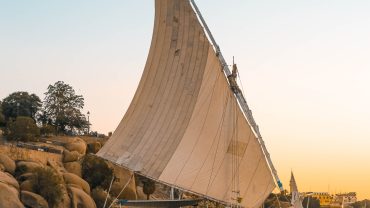
Evening: A felucca ride on the Nile or dinner on a rooftop terrace with a view of the lit-up temples.
Alternatives If You’d Rather Stay on the Ground
Not everyone wants to go up in a balloon, and that’s fine. You can still get a high view of Luxor from:
The West Bank hills, where short walks or drives give wide views over the valley.
Rooftop restaurants and hotel terraces at sunrise or sunset.
A sunrise felucca or Nile boat ride, a gentle alternative with beautiful light.
The viewpoint above Deir el-Bahari for a bird’s-eye look at Hatshepsut’s temple.
Final Thoughts
Floating over Luxor at sunrise, with the Nile glinting below and thousands of years of history spread across the land, is an experience that stays with you. It’s also an activity that deserves careful planning. Choose a licensed operator, listen closely to the safety briefing, stay flexible about weather, and decide honestly whether it feels right for you. If it does, you’ll see Egypt from a perspective the pharaohs could only imagine.
Explore exciting tours and unforgettable Red Sea adventures.
View Tours & Excursions →
Find your dream property by the Red Sea with flexible installments.
Explore Properties →
Comment (0)