


The Origins of Ancient Egypt
Ancient Egypt, one of the most captivating civilizations in human history, began forming around 3100 BC. This remarkable timeline marks the birth of a society that would flourish for thousands of years, laying down the foundational elements of culture, governance, and religion that resonate even today. Established along the banks of the Nile River, Ancient Egypt was strategically positioned in a fertile landscape, which played a crucial role in its development. The Nile provided not only water essential for agriculture but also served as a vital transportation route that further facilitated trade and communication.
The unification of Upper and Lower Egypt is a pivotal moment, occurring around 3100 BC under the rule of Narmer, also known as Menes. This unification was significant as it established a centralized state, allowing for more efficient governance and stronger defenses against potential invasions. It is commemorated by the Narmer Palette, an artifact depicting Narmer’s triumph. The merging of these two regions brought about a shared identity and culture, which is reflected in art, architecture, and religious practices that evolved over time.
The influence of Ancient Egypt on subsequent cultures and civilizations is immeasurable. It introduced advancements in writing, particularly through hieroglyphics, which served as an early form of communication and record-keeping. Their architectural prowess is exemplified in the construction of monumental structures like the Pyramids and temples, which not only demonstrated engineering expertise but also embodied the Egyptians’ deep spiritual beliefs and reverence for their deities.
Moreover, the legal and administrative systems initiated during this period laid down principles that would influence governance in other civilizations. The practice of maintaining a complex social hierarchy and the establishment of trade routes also showcased the sophistication of this ancient society. Overall, the origins and development of Ancient Egypt represent a rich tapestry of innovation and cultural achievement that continues to fascinate historians and the general populace alike.
The Great Pyramids and Sphinx
The Great Pyramids of Giza, particularly the Pyramid of Khufu, represent one of the most remarkable achievements of ancient engineering and architecture. Constructed during the Fourth Dynasty of the Old Kingdom, this immense structure stands as a testament to the sophistication of Ancient Egyptian society. The pyramid, originally reaching a height of 146.6 meters, was built using approximately 2.3 million blocks of stone, each weighing an average of 2.5 tons. The precise alignment and construction techniques used in building the pyramids have baffled historians and archaeologists alike, highlighting the advanced understanding of mathematics and astronomy possessed by the Egyptians.
In addition to their physical presence, the pyramids were designed as monumental tombs for pharaohs, showcasing their significance in the religious and cultural belief systems of Ancient Egypt. They served not only as burial sites but also as symbols of the pharaohs’ divine status, illustrating their role in ensuring the continuity of life after death and the successful journey to the afterlife. This functional aspect of the pyramids indicates their integral role within the larger context of Egyptian civilization.
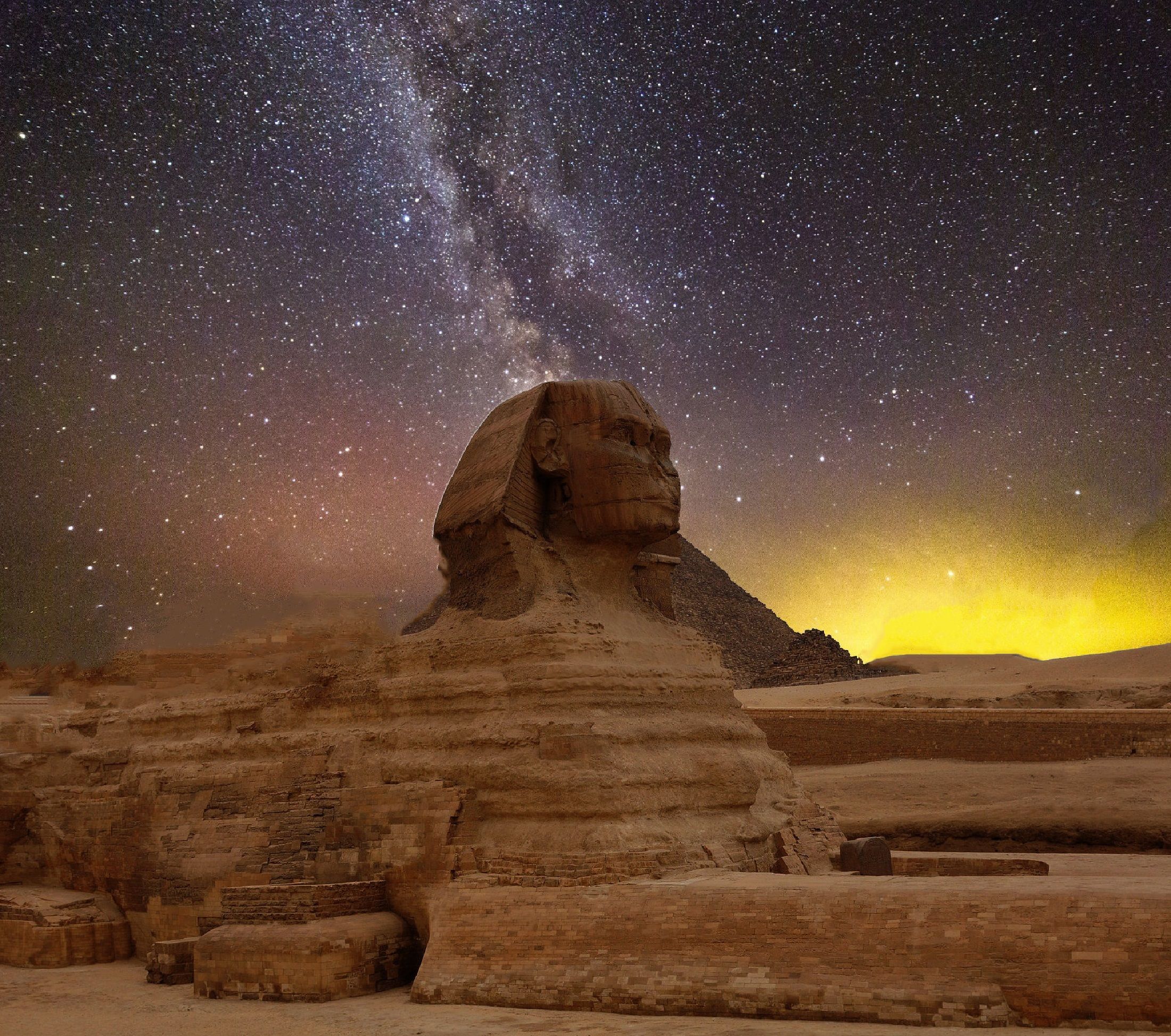
Alongside the pyramids lies the Great Sphinx, another iconic monument that further underscores the artistic and engineering prowess of the Egyptians. The Sphinx, with its lion’s body and human head, is believed to represent King Khafre, and is intricately linked to the adjacent pyramid complex. The statue is carved from a single piece of limestone, which illustrates not only the skills of the artists but also reflects the symbolic representation of strength and wisdom.
The enduring legacy of the Great Pyramids and the Sphinx continues to captivate historians, archaeologists, and tourists alike. Their construction techniques and the cultural implications they carry contribute to our understanding of Ancient Egypt’s civilization. The ongoing preservation efforts underscore the importance of these monuments, ensuring that future generations can appreciate the wonders of Ancient Egyptian architecture and artistry.
The Role of the Nile River
The Nile River, often referred to as the lifeblood of Egypt, plays a crucial role in the sustenance and development of Egyptian civilization. This ancient river is not only the longest in the world but also a significant source of water, which has supported agriculture for thousands of years in a region characterized by arid deserts. The predictable flooding of the Nile, occurring annually, deposited nutrient-rich silt along its banks, facilitating the growth of crops and allowing the emergence of a stable agricultural society.
As a vital irrigation resource, the Nile enabled the cultivation of various crops, including wheat and barley, contributing to food security and economic prosperity in ancient Egypt. The reliance on this river for agriculture allowed the civilization to flourish, as surplus production supported urbanization and the development of complex societal structures. Farmers maximized the river’s potential by developing innovative irrigation techniques, enhancing agricultural output and, by extension, the economy.
In addition to its agricultural importance, the Nile River served as a significant artery for commerce and trade. Mercantile activities along its banks transformed the river into a bustling trade route, facilitating the exchange of goods both locally and with distant regions. This enabled the flow of essential commodities, including gold, papyrus, linen, and other resources, enhancing Egypt’s economic and cultural interactions with neighboring civilizations.
Furthermore, the cultural significance of the Nile is deeply intertwined with Egyptian identity and spiritual beliefs. Many deities were associated with the river, emphasizing its importance in religious narratives and practices. The Nile was a symbol of life, prosperity, and continuity, and ancient Egyptians revered it as a divine gift. Artistic representations frequently depicted the river, highlighting its central role in daily life, mythology, and the overall ethos of the Egyptian civilization.
Egypt’s Contributions to Knowledge and Culture
Egypt, often referred to as the birthplace of civilization, has made significant contributions to various fields such as writing, mathematics, medicine, and architecture. These accomplishments have not only shaped its own culture but have also profoundly influenced subsequent civilizations across the globe.
One of the most notable achievements of ancient Egypt is the development of writing systems, particularly hieroglyphics. This sophisticated writing system allowed for the recording of administrative, religious, and literary texts, preserving Egypt’s rich history and culture for future generations. The ability to document events and ideas laid the foundation for communication and knowledge sharing, making it a cornerstone for subsequent societies.
In the realm of mathematics, the ancient Egyptians made significant progress that included the development of a decimal system and various geometrical formulas. Their work on calculating areas and volumes was crucial for construction projects, notably the building of the pyramids. The mathematical principles established by the Egyptians were instrumental in influencing Greek mathematicians, showcasing the interconnectedness of ancient cultures.
Moreover, Egyptian medicine was remarkably advanced for its time. The ancient Egyptians practiced surgical procedures, dentistry, and various forms of healing using natural remedies. The medical texts they created served as foundational materials for future medical knowledge, influencing not just the Greeks but later civilizations throughout the Roman Empire and beyond.
Architecturally, Egypt is known for its awe-inspiring monuments such as the pyramids and temples. These structures weren’t merely tombs or religious sites; they represented complex engineering capabilities and a deep understanding of construction techniques. The architectural legacy of Egypt can still be seen today, impacting both modern architecture and the cultural identity of subsequent civilizations.
In conclusion, the remarkable contributions of ancient Egypt to writing, mathematics, medicine, and architecture have had lasting effects on the development of knowledge and culture, not only within its own civilization but also across the world. These achievements underscore the importance of ancient Egypt in the annals of history, shaping the course of humanity’s progress in diverse fields.
Explore exciting tours and unforgettable Red Sea adventures.
View Tours & Excursions →
Find your dream property by the Red Sea with flexible installments.
Explore Properties →
0 Comment